
What Happens in Your Body During Stress?
Stress is more than a feeling — it is a coordinated biological response that touches the brain, nervous system, hormones, and nearly every organ.


Quick Summary
- Stress is a coordinated brain-and-body response, not only a feeling — it involves the nervous system, hormones, and nearly every organ.
- The sympathetic nervous system and catecholamines such as adrenaline support the fast response; the HPA axis and cortisol coordinate adaptation over time.
- Cortisol is essential to normal physiology and is not inherently harmful.
- Acute stress can be adaptive; repeated or prolonged activation with limited recovery may increase allostatic load.
- Chronic stress does not always mean cortisol is continuously high — the patterns are more varied than that.
- Stress affects people differently; persistent or severe symptoms should be assessed by a healthcare professional.
Guided View
Stress starts in the brain
The amygdala and hypothalamus evaluate a possible threat and begin coordinating changes across the entire body — often before you have fully processed what is happening.
Two waves of response
The fast sympathetic response releases adrenaline within seconds. The HPA axis follows with cortisol, which helps regulate energy and adaptation over minutes to hours.
A whole-body pattern
Heart rate, breathing, muscle tension, digestion, attention, and immune activity all shift during stress. These changes are coordinated, not random.
Acute vs chronic
Short-term stress can be adaptive and self-limiting. Problems are more likely when stress is repeated or prolonged and the body has too little opportunity to recover.
Recovery is trainable
Sleep, movement, breathing practices, and reduced demand all support the nervous system's return to baseline. Regulation is a skill that responds to consistent, realistic conditions.
Full Article
A racing heart, tighter muscles, faster breathing, a churning stomach, and a mind that suddenly narrows to one problem can feel like separate, unrelated symptoms. They are often parts of the same coordinated biological response.
Stress is not only a thought or a mood. It is a whole-body process set in motion when the brain detects something that needs a response — a demand, a challenge, or a possible threat. This response is not automatically harmful. In the short term it can help you react quickly, direct energy toward action, and focus attention on what matters most. Problems are more likely when stress is intense, repeated, or prolonged and the body has too little opportunity to recover.
Stress begins with perception
The stress response begins with the brain interpreting information. The trigger may be external — a sudden noise, a deadline, a difficult conversation, or physical danger. It may also be internal — pain, a distressing memory, uncertainty, or a thought about what could go wrong.
Several brain networks take part in evaluating what the situation means. The amygdala is involved in identifying emotional significance and possible threat. Areas of the cortex help interpret context and weigh options. The hypothalamus helps translate that appraisal into signals that change activity throughout the body.
Popular accounts sometimes describe a single rapid pathway that bypasses conscious thought. Rapid and partly automatic threat detection is well supported by research, but the full picture involves a more interconnected set of brain pathways. The important point is that the body can begin preparing for action before you have fully put the experience into words.
The fast response: the sympathetic nervous system
One of the first major changes is activation of the sympathetic branch of the autonomic nervous system. This branch helps coordinate rapid arousal. Signals reach the adrenal medulla, which releases the catecholamines adrenaline and noradrenaline into the bloodstream.
These chemical messengers can increase heart rate and the force of heart contractions, widen airways, sharpen alertness, and help make stored energy available quickly. Blood flow and energy use shift toward functions that may be useful for immediate action.
The hormonal response: the HPA axis and cortisol
Alongside the fast sympathetic response, a slower hormonal process begins through the hypothalamic-pituitary-adrenal axis — usually shortened to the HPA axis. The hypothalamus releases signaling hormones that prompt the pituitary gland to release ACTH. ACTH travels through the bloodstream to the adrenal cortex, where it supports the release of cortisol.
Cortisol is often described as a harmful 'stress hormone', but it is essential to normal physiology. It helps regulate energy availability, blood pressure, metabolism, immune activity, and the body's adaptation to changing demands. Cortisol also follows a natural daily rhythm, normally rising in the morning and gradually falling toward evening.
The fast sympathetic response and the HPA-axis response overlap. They are not two completely separate stages, and should not be understood as a simple sequence in which adrenaline finishes and cortisol begins.
What stress changes across the body
Heart and circulation: Adrenaline and sympathetic activity can make the heart beat faster and more forcefully. Blood vessels in some areas constrict while circulation is redistributed. This may feel like pounding, warmth, flushing, or cold hands.
Breathing: Breathing often becomes faster during stress. This can support physical action, but breathing more quickly or deeply than the body needs may also contribute to lightheadedness or a sense of breathlessness in some situations.
Muscles: Muscles may tense in preparation for movement or protection. Short-lived tension is part of the normal readiness response. Repeated tightening of the shoulders, jaw, neck, or back can become uncomfortable when activation is frequent and recovery is limited.
Digestion: The autonomic nervous system can alter digestive movement, secretion, and blood flow. Depending on the person and the situation, stress may be associated with nausea, appetite changes, urgency, constipation, or abdominal discomfort. These symptoms can also have other causes.
Attention and decision-making: Under acute stress, attention may become more focused on urgent or emotionally significant information — which can be useful when immediate action is required. It can also make flexible thinking, working memory, and complex decision-making more difficult, particularly when stress is intense or feels uncontrollable.
Immune regulation: Stress does not simply switch off the immune system. Short-term stress can redistribute immune cells and temporarily change immune activity. With prolonged or repeated stress, the signaling between stress hormones and immune processes may become less well regulated.
How the body returns toward balance
When the situation resolves, the stress response is normally reduced through several interacting mechanisms. Parasympathetic activity supports functions associated with slowing down, digestion, and recovery. Cortisol also participates in negative-feedback signaling through receptors in the brain and pituitary, helping limit further HPA-axis activation.
Recovery is not the same as an instant return to calm. Heart rate, muscle tension, attention, and hormone levels may settle at different speeds. A person may also remain alert for a time after the immediate event if the situation still feels uncertain.
Acute, repeated, and chronic stress
Acute stress is relatively brief and tied to an immediate demand. It may be uncomfortable, but it is often self-limiting and can be adaptive — helping the body meet a challenge and then recover. Repeated stress involves frequent episodes with too little recovery between them. Chronic stress refers to demands or perceived threats that continue over a longer period.
Chronic stress does not always produce continuously high cortisol. Research describes several possible patterns of HPA-axis change, including altered daily rhythms, stronger or weaker responses, and differences between people and conditions. This means that stress symptoms alone cannot reveal what is happening with a person's cortisol level.
What is allostatic load?
Allostasis means maintaining stability through change. The body constantly adjusts to activity, temperature, illness, food availability, social demands, and emotional experience. These adjustments are necessary and normal. Allostatic load refers to the cumulative biological cost that may develop when adaptation is repeatedly demanded, poorly regulated, or followed by inadequate recovery.
Over time, repeated activation without sufficient recovery may be associated with changes across cardiovascular, metabolic, immune, sleep, and cognitive systems. These are patterns of association, not proof that stress alone directly causes a particular illness.
Why people respond differently
The same event does not produce the same response in everyone. Stress reactivity is shaped by context, previous experiences, perceived control, current sleep quality, physical health, social support, and individual biology. Even within one person, the response may differ from one day to the next.
This is one reason that simple claims about 'resetting' the nervous system or 'balancing' cortisol can be misleading. Regulation is not a fixed state of calm. It is the ability to respond appropriately, recover when possible, and adapt across changing situations.
Skill to Try: The Physiological Sigh
You can do this anywhere, at any time, without anyone noticing. No app required.
Supporting recovery from everyday stress
No single technique works for everyone, and no approach removes stress entirely. Recovery is usually supported by a combination of consistent sleep, physical activity that fits the person's health, manageable routines, and periods of reduced demand.
Slow, deliberate breathing, progressive muscle relaxation, and mindfulness practices may help some people reduce perceived stress or physiological arousal. Some people also find support from nutrients that play a role in nervous system function — magnesium is one of the most studied. These are supportive tools alongside good foundations, not substitutes for professional care when symptoms are severe, persistent, or interfering with daily life.
Explore further: complete guide to understanding and managing stress
The bigger picture
The stress response is an adaptive system, not evidence that the body is broken. It mobilizes energy, changes attention, and coordinates organs so that you can meet a challenge. The goal is not to eliminate every stress response — it is to create enough safety, recovery, and flexibility that short-term activation does not become the body's only familiar state.
Educational Disclaimer
This content is for informational and educational purposes only. It is not intended as medical advice and does not replace professional consultation. Always speak with a qualified healthcare provider before making changes to your health routine.
Questions About This Topic
Sources & Further Reading
- Physiology, Stress Reaction — StatPearls / NCBI Bookshelf (Chu B et al., 2024) (opens in new tab)
- Stress: Endocrine Physiology and Pathophysiology — Endotext / NCBI Bookshelf (Tsigos C et al., 2020) (opens in new tab)
- Regulation of the Hypothalamic-Pituitary-Adrenocortical Stress Response — Comprehensive Physiology / PMC (Herman JP et al., 2016) (opens in new tab)
- Neurobiological and Systemic Effects of Chronic Stress — Chronic Stress / PMC (McEwen BS, 2017) (opens in new tab)
- The Effects of Acute Stress on Core Executive Functions: A Meta-Analysis — Neuroscience & Biobehavioral Reviews (Shields GS et al., 2016) (opens in new tab)
- The Role of the Amygdala in Human Fear: Automatic Detection of Threat — Psychoneuroendocrinology (Öhman A, 2005) (opens in new tab)
- Neuroendocrine Aspects of the Response to Stress — Metabolism / CDC Stacks (Miller DB & O'Callaghan JP, 2002) (opens in new tab)
- Regulation of Stress-Induced Immunosuppression — Biology (Balakin E et al., 2025) (opens in new tab)
A Practice to Try
A short guided practice connected to this topic.
Focus Reset
Beginner
A short attention exercise with three gentle phases — settle, follow, and return — designed to help bring your awareness to the present moment.
This practice is for educational purposes only and is not medical advice. If you feel unwell or have a medical condition, consult a qualified healthcare professional before starting any new practice.
Related Reading
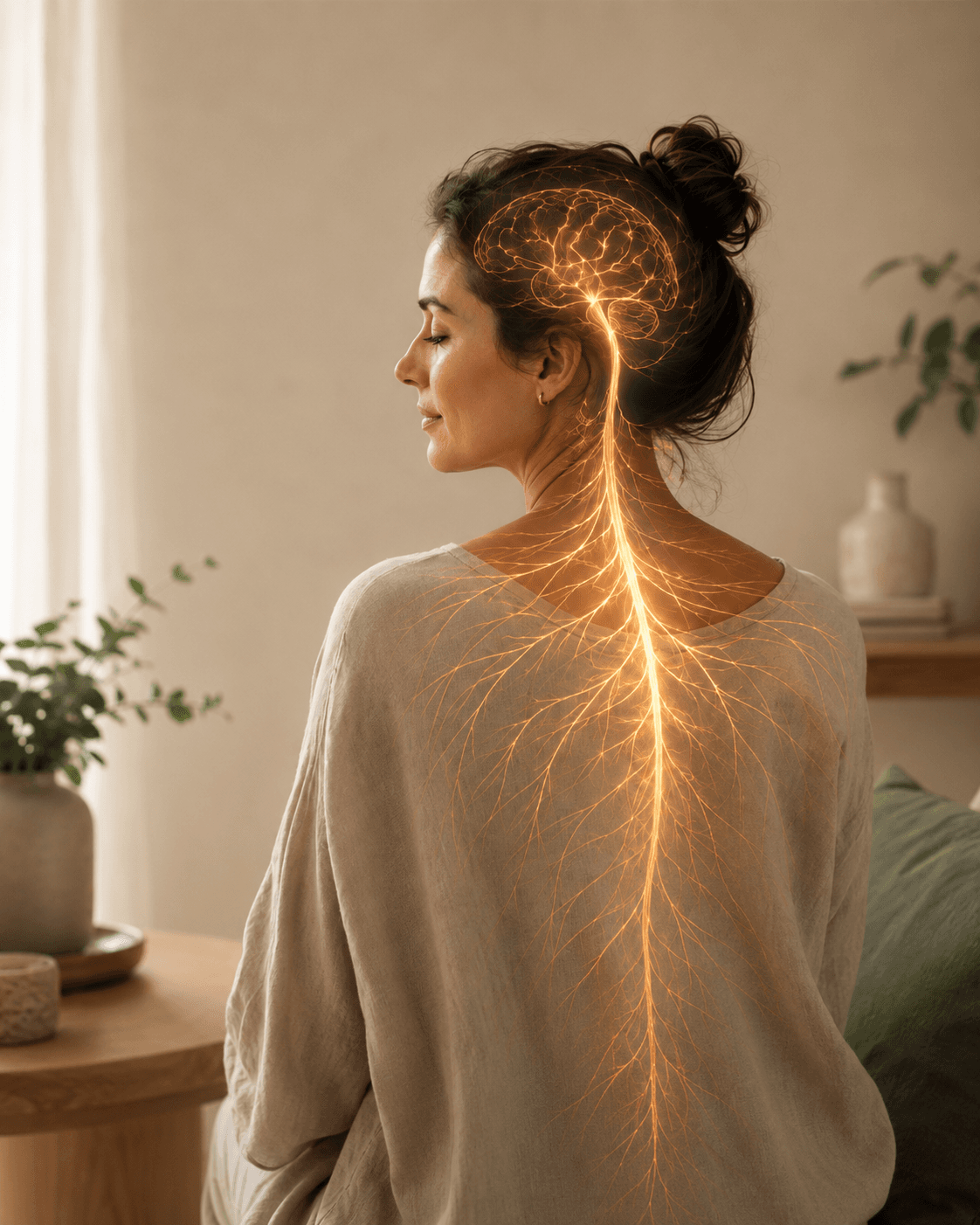
How Your Nervous System Responds to Stress
Your nervous system is not broken — it is doing exactly what it was designed to do. Understanding its two main modes and how to shift between them is one of the most useful things you can learn.
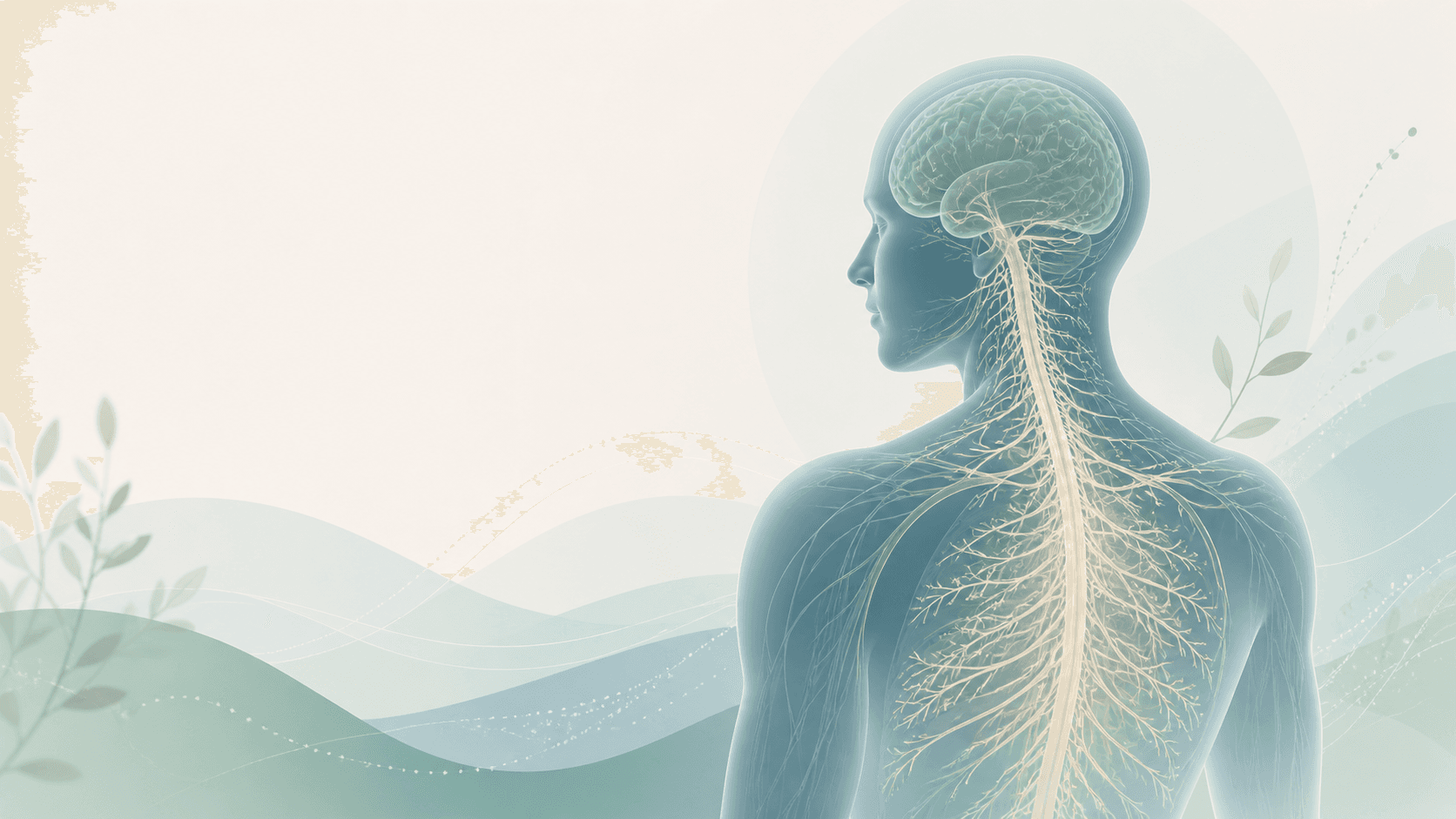
How Stress Affects the Nervous System
Stress is not just a feeling — it is a physical process that runs through your nervous system. Understanding what happens inside your body when you're under pressure is the first step to finding your way back to calm.

The Relaxation Response: Techniques to Support Daily Balance
Chronic stress wears on the body over time. The relaxation response is your body's built-in counterbalance — and with the right techniques, you can learn to activate it consistently.

Continue exploring
Discover guides, supplements, books, and practical resources for stress & mental balance.